Porcelain Crowns in Turkey
“Porcelain crown” describes a family of restorations rather than a single product. Some are built up in layers over a core; some are pressed or milled from a single block of lithium disilicate. Each behaves differently, and the choice affects how the crown looks, how it wears and how easily it can be repaired.
This page is for patients who have already established that they need crowns and are now deciding on the material — a decision worth understanding, because it is often presented as a matter of taste when it is really a clinical one.
The materials, plainly described
Ask which of these you are being offered, and on which teeth. The answer should differ from the front of the mouth to the back.
- Layered porcelain over metal: strong and long-established, though the metal can darken the gum line and the porcelain can chip where it is thin.
- Layered porcelain over zirconia: no metal to show through, better for front teeth, more expensive to make.
- Monolithic zirconia: milled as one piece, very strong, slightly more opaque. Common for back teeth and full-mouth cases.
- Lithium disilicate (often called e.max): milled or pressed glass-ceramic with excellent translucency, widely used for front teeth and veneers.
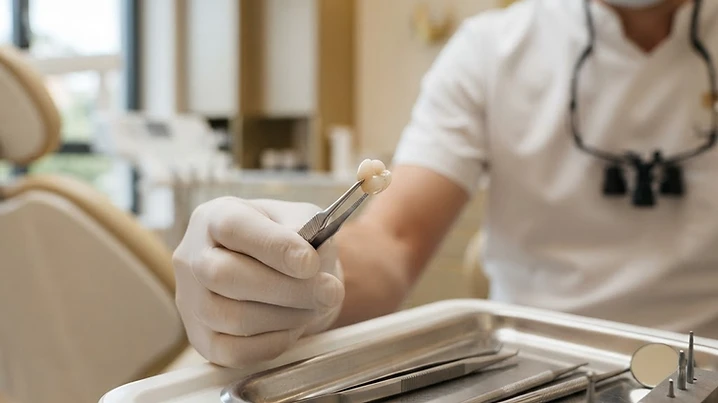
Which tooth gets which material
The front teeth are judged on appearance and take less chewing force, so translucent ceramics are usually chosen there. The back teeth take the load and are rarely seen, so strength matters more than translucency.
A plan that proposes the same material for every tooth in the mouth is worth questioning. A good plan usually mixes materials where the mouth calls for it — or explains why one material suits the whole case.
Not sure which treatment applies to you? A coordinator will go through it with you.
Appearance, shade and glazing
How natural a crown looks depends on the shaping and the shade as much as on the material. Take photographs to the appointment showing the look you want, and discuss the shade in daylight rather than under clinic lighting.
Very bright, uniform teeth read as false against most faces. We would usually suggest a shade matched to the whites of your eyes and skin tone rather than the brightest block in the shade guide.
Costs and questions to ask
Material is one of the reasons two quotes for the same number of crowns can differ substantially. Ask for the material by name in the written plan, and ask what a replacement crown would cost later.
If you grind your teeth, mention it: it affects which material is sensible and whether a night guard should be part of the plan. Book a free assessment or read about dental crowns in general.
Porcelain Crowns in Turkey: questions patients ask
Are porcelain crowns better than zirconia?
They are different rather than better. Layered porcelain and lithium disilicate generally look more lifelike at the front; zirconia is stronger and often used at the back. Many plans use both.
Which crowns look most natural?
Translucent glass-ceramics at the front, shaped and shaded to match your other teeth, usually look the most natural. The planning and the laboratory matter as much as the material.
Can porcelain crowns chip?
Layered porcelain can chip where the layer is thin, particularly if you grind your teeth. Monolithic zirconia is much less prone to chipping.
How long do porcelain crowns last?
Commonly ten years or more, depending on the bite, habits and cleaning. Replacement is normal at some point in a lifetime.
Will the metal show through my gums?
Porcelain fused to metal can grey the gum margin over time. If your crowns are in the smile line, ask about metal-free options.
Thinking about dental treatment in Turkey?
Speak to the SmileOver team about your individual requirements. We will tell you which treatments are likely to suit you, what a realistic timeline looks like, and what the cost would be — in writing, before you commit to anything.
No guarantees are made about results, and no medical advice is given before an assessment. Everything on this page is general information for UK patients.
How to read this page
SmileOver is a coordination service. We arrange consultations, written treatment plans, airport and clinic transfers, accommodation and aftercare contact for patients travelling from the UK and elsewhere.
Clinical care — diagnosis, treatment planning and the treatment itself — is provided by the independent dental clinic and its registered dentists in Turkey. SmileOver does not practise dentistry and does not decide which treatment you need.
Every page here is general information, not medical advice. Your dentist will assess your own teeth, and treatment varies between patients. No outcome is guaranteed and no treatment is suitable for everyone.
Related reading for UK patients
More detail on the questions that come up most often, and the pages that explain how treatment with SmileOver is organised.