Dental Veneers in Turkey
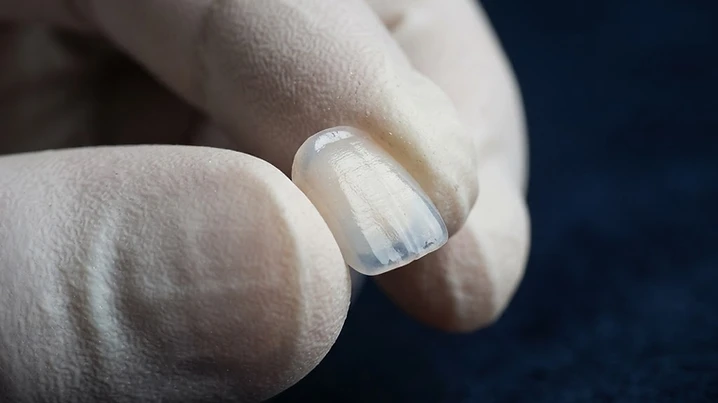
A veneer is a thin facing bonded to the front of a tooth to change its colour, shape or alignment. It removes less tooth than a crown, which makes it the more conservative option for teeth that are intact but look wrong.
This hub explains the forms a veneer takes — porcelain, composite bonding, and minimally prepared designs — and the questions worth asking before you agree to anything, including how many teeth genuinely need treating.
The different kinds of veneer
The word veneer covers several quite different treatments, and the differences matter more than the name. Ask which one you are being offered and how much tooth it involves.
- Porcelain veneers: laboratory-made facings, generally 0.3–0.7mm thick, bonded after minimal preparation. The longest-lasting option and the most expensive.
- [Composite bonding](composite-bonding-turkey): tooth-coloured resin shaped directly onto the tooth in the chair. Cheaper and more easily repaired, but it stains over time and needs replacing sooner.
- Minimal-prep or no-prep veneers: very thin facings requiring little or no reduction, suitable only for some cases.
- Crowns: sometimes the honest answer where a tooth is heavily filled or broken, because a veneer would sit on unstable foundations.
Who veneers suit, and who they do not
Veneers suit teeth that are sound but discoloured, slightly chipped, uneven or mildly rotated. They work best where the underlying gums are healthy and the bite is stable.
They are a poor choice where teeth are badly misaligned — orthodontics would give a better result — or where someone grinds their teeth heavily, because the forces go through the facing. Where most of the visible teeth need changing, some clinics recommend a full set of veneers; ask whether that is necessary or whether a smaller number of teeth would do the job.
Not sure which treatment applies to you? A coordinator will go through it with you.
The trip and the timeline
Veneers are usually finished in about five to seven days, in a sequence of examination, preparation where needed, try-in, then bonding. The try-in stage matters: it is your chance to see the shape and shade before they are fixed.
Veneers feel odd for a few days while you adjust to the new surface, and biting into very hard food with the front teeth is best avoided afterwards. Plan a review with your own dentist at home if anything needs checking.
Before you book
Ask what will be removed from each tooth, which teeth are being treated, what the material is and what it costs to replace a veneer later. If the answer to the first question is vague, the plan is vague.
A coordinator can talk you through whether veneers, bonding or nothing at all is the sensible route for your teeth. Request a free assessment with a few daylight photographs, or read how treatment costs are built first.
Everything on Dental Veneers in Turkey
1 pages covering this subject in detail, from the treatments themselves to the questions patients ask before booking. Each one explains what the treatment involves, what it costs and what to ask before you decide.
Veneers & bonding · 1
Dental Veneers in Turkey: questions patients ask
How much do veneers cost in Turkey?
Guide prices per veneer are published on our Turkey teeth prices page. A written plan for your own case follows an examination and states the material and the number of teeth.
How long do porcelain veneers last?
Ten years or more is common. Composite bonding typically needs attention sooner, and both depend on your bite, cleaning and habits.
Do veneers ruin your teeth?
They do not have to. The concern is preparation: some plans remove more tooth than is necessary. A minimally prepared design that needs no or little reduction avoids that, when your case allows it.
Veneers or crowns — which do I need?
Veneers cover the front face of a sound tooth; crowns cover the whole tooth and are used where the tooth is heavily filled, root-treated or broken. That judgement needs an examination.
Can I have just a few teeth done?
Often, yes — and treating fewer teeth conservatively is usually better than a full set. The exceptions are cases where many teeth are worn or broken down.
Thinking about dental treatment in Turkey?
Speak to the SmileOver team about your individual requirements. We will tell you which treatments are likely to suit you, what a realistic timeline looks like, and what the cost would be — in writing, before you commit to anything.
No guarantees are made about results, and no medical advice is given before an assessment. Everything on this page is general information for UK patients.
How to read this page
SmileOver is a coordination service. We arrange consultations, written treatment plans, airport and clinic transfers, accommodation and aftercare contact for patients travelling from the UK and elsewhere.
Clinical care — diagnosis, treatment planning and the treatment itself — is provided by the independent dental clinic and its registered dentists in Turkey. SmileOver does not practise dentistry and does not decide which treatment you need.
Every page here is general information, not medical advice. Your dentist will assess your own teeth, and treatment varies between patients. No outcome is guaranteed and no treatment is suitable for everyone.
Related reading for UK patients
More detail on the questions that come up most often, and the pages that explain how treatment with SmileOver is organised.