The Most Popular Non-Surgical Injectables — and What Each One Really Does
Botox, dermal fillers, skin boosters, biostimulators — a plain-English guide to what each one does, how long it lasts, and which are worth it.
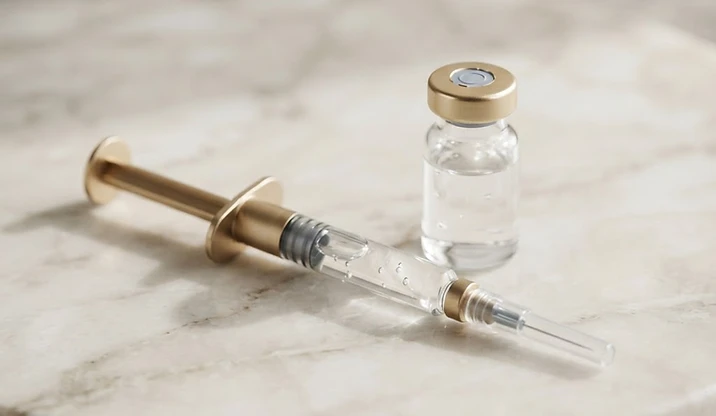
Non-surgical injectables are the most requested aesthetic treatments in the world, and they've quietly become the treatments people book alongside dental work abroad. That makes sense: they're quick, there's no real downtime, and the results show up in the same mirror as your new smile.
The problem is the language. Every clinic uses the same three words — Botox, fillers, boosters — for treatments that do completely different things to your face.
Here's what each one actually does, in plain English.
Botulinum toxin — the muscle relaxant
Sold as: Botox, Dysport, Xeomin, Azzalure.
What it does: it relaxes the small muscles that crease your skin. It doesn't add volume and it doesn't fill anything — it stops the muscle doing the work that creates the line.
Best for: frown lines between the brows, forehead lines, crow's feet, and increasingly the "bunny lines" on the nose and a gummy smile.
How long it lasts: three to four months. It's the shortest-lasting injectable, which is why it needs maintaining.
The honest caveat: botulinum toxin softens lines created by movement. Lines that are already etched into the skin at rest — deeper folds, sun damage — won't disappear with toxin alone. That's often where fillers come in.
Hyaluronic acid dermal fillers — the volume
Sold as: Juvéderm, Restylane, Teosyal and many others.
What it does: hyaluronic acid is a gel that holds water. Injected deeper, it restores volume; injected finely, it defines edges. It's the treatment that "fills".
Best for: lips, cheek volume, nasolabial folds, chin and jawline definition, tear troughs (in experienced hands only), and hands.
How long it lasts: six to eighteen months, depending on the product, the area and how much you move that part of your face. Lip filler tends to fade faster than cheek filler.
Why it's the safest starting point: hyaluronic acid fillers are reversible. If you don't like the result, an enzyme called hyaluronidase dissolves them. No other injectable gives you that exit.
Skin boosters — hydration, not volume
Sold as: Juvéderm Volite, Restylane Skinboosters, Profhilo.
What they do: these are micro-injections of hyaluronic acid spread just under the skin surface. They don't reshape anything — they hydrate and improve skin quality, giving that "glass skin" finish.
Best for: dull, dry, crepey or tired-looking skin; fine lines; and anyone who wants fresher skin without changing their face.
Profhilo is the one people ask about most. It's a high-concentration, non-cross-linked hyaluronic acid that spreads under the skin and stimulates hydration and collagen from within. It's usually two sessions a month apart, with results lasting about six months.
How long it lasts: roughly four to six months for skin-boosting effects.
The honest caveat: if your goal is "fuller lips" or "higher cheekbones", this is the wrong treatment. Boosters improve the quality of your skin, not its shape.
Polynucleotides — the newer option
Sold as: PDRN or PN treatments.
What they do: these are fragments of DNA derived from salmon (genuinely) that are thought to support skin repair and tissue regeneration at a cellular level.
Best for: under-eye hollows, very thin or crepey skin, and areas where filler can look heavy.
How long it lasts: typically a course of three sessions, with results building over two to three months.
The honest caveat: this is the newest category here and the evidence base is still developing. It's promising, particularly around the eyes — but ask what the clinic has actually seen, not what the brochure promises.
Collagen-stimulating injectables — the long game
Sold as: Sculptra (poly-L-lactic acid), Radiesse (calcium hydroxylapatite).
What they do: rather than filling the space themselves, they trigger your own collagen production. Results come on gradually over two to three months and look like your face, only firmer.
Best for: overall facial volume loss, mild sagging, and people who don't want to look "done".
How long it lasts: one to two years — the longest of anything on this list.
The honest caveat: these are not reversible. Unlike hyaluronic acid, there's no dissolving them. They also require real skill and a careful consultation, because what you're committing to is your own tissue response.
PRP and mesotherapy — the supporting cast
PRP (platelet-rich plasma) uses your own blood, spun and re-injected. It's used on the face for skin quality and around the hairline for thinning. Because it's your own plasma, allergy risk is minimal. Results are subtle and usually need a course.
Mesotherapy is a cocktail of vitamins, minerals and sometimes hyaluronic acid injected in a grid of tiny needle points. It's popular, comfortable and cheap — and the effects are modest. Treat it as a skin boost, not a transformation.
So which ones are actually most popular?
In practice, two treatments dominate, and they dominate for good reason:
- Botulinum toxin for the upper face — the fastest, most predictable visible change.
- Hyaluronic acid filler for lips, cheeks and jawline — the most controllable, and the reversible one.
Skin boosters and Profhilo come next, largely because they're the "I don't want to look different, I want to look better" option.
Combining injectables with dental work in Marmaris
If you're travelling for dental treatment, aesthetic treatments can usually be fitted around your appointment schedule — and our clinic offers them from £100. Two practical points:
- Order matters. If you're having anything surgical, we generally schedule injectables after the dental stage, or allow spacing between the two, so healing and swelling don't confuse the picture.
- Don't fly home too soon. Bruising around the eyes or lips peaks in the first two days. Allow a few days between your last injection and your flight if you'd rather arrive home settled.
Safety — the part worth taking seriously
Injectables are medical procedures. The product and the injector both matter:
- Only genuine, regulated products. Counterfeit filler is the single biggest risk in this market. Ask to see the product box and the batch number.
- Only qualified, trained injectors with a proper consultation, a medical history, and consent.
- Not if you're pregnant or breastfeeding, have an active skin infection in the area, or have certain autoimmune conditions. Blood-thinning medication needs discussing beforehand.
- Temporary and expected: redness, swelling, small bruises, a heavy feeling in the forehead for a week or so. Not expected: severe pain, blanching white skin, vision changes, or lumps that don't settle. Those need urgent assessment.
Questions worth asking any clinic
- Which exact product and brand are you using, and can I see the box?
- How many of these have you personally done?
- What happens if I don't like the result — can it be reversed?
- What's included in the quoted price, including any review appointment?
- Who do I contact if something concerns me after I fly home?
The short version
Botox relaxes muscle. Hyaluronic acid filler adds volume and can be dissolved if you change your mind. Boosters and Profhilo improve skin quality without changing your shape. Biostimulators build collagen slowly and last longest, but they're permanent commitments. PRP and mesotherapy are gentle supporting treatments.
Decide what you want to change — movement, volume, or skin quality — and the treatment picks itself.
This article is general information, not medical advice. Injectable treatments are medical procedures; suitability is decided in a proper consultation with a qualified practitioner.
Want to talk through your own situation? Our coordinators answer questions with no obligation — in plain English, before you commit to anything.