Dental Implants in Turkey: What the Treatment Actually Involves
How implants work, how long the whole thing really takes, and the questions worth asking before you commit to any clinic.
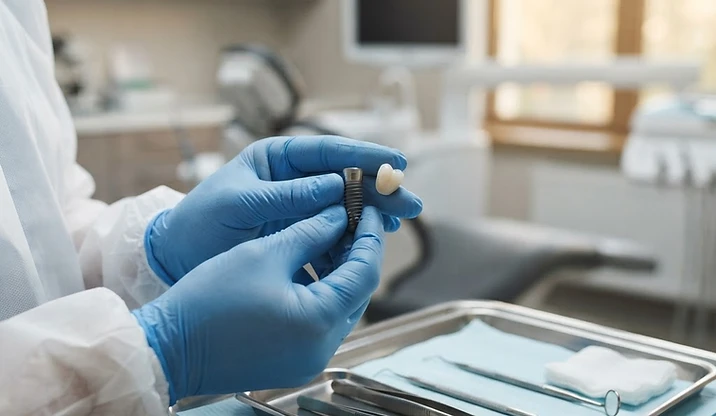
Most people arrive at the idea of dental implants through the same route: a tooth (or several) that they've worked around for years. They've stopped smiling properly in photos, they chew on one side, and they've started to notice how much it costs to fix in the UK.
Here's an honest walkthrough of what implant treatment involves — including the parts that take patience.
What an implant actually is
An implant is a small titanium screw that takes the place of a missing tooth root. It's placed into the jawbone, the bone grows around it over the following months, and then a crown is fitted on top. The implant itself is the foundation; the tooth you see and chew with is the crown.
That distinction matters, because a quote for "one tooth" is really a quote for two things: the implant and the crown — and the quality of both is what you're paying for.
Single tooth, several teeth, or a full arch
- One implant, one crown for a single missing tooth.
- Two or more implants to carry a bridge when several teeth are missing side by side.
- Four to six implants supporting a full arch of teeth, often called an All-on-4 or All-on-6 style solution.
Full-arch work is a much bigger decision than a single tooth, and it deserves a proper scan and a written plan before anything is booked.
The timeline, honestly
- Assessment — usually on day one of your visit: x-rays, often a CT scan, and a conversation about what's possible.
- Implant placement — typically 45–60 minutes per implant under local anaesthetic. Most patients describe it as easier than they expected.
- Healing — three to four months while the bone bonds to the implant. This part happens at home, with a temporary tooth in place.
- Crown fitting — a second visit to fit the final crown, once healing is confirmed.
One trip or two?
For implants, it's usually two visits: one to place the implants, and a second a few months later to fit the final teeth. Patients often combine the second visit with a holiday. If you need something fixed in the mouth while you heal, provisional teeth can usually be made during the first trip so you're never left without a smile.
Does it hurt?
The placement itself is done with local anaesthetic, so you shouldn't feel pain during it. The days afterwards are usually described as soreness and swelling rather than pain — managed with ordinary painkillers. Most people are back to normal eating (soft food) within a week.
Who isn't a good candidate?
We'd rather tell you this than take a booking that can't end well. Implant success depends on gum health, bone volume, and how well you heal. Things that can complicate it:
- Uncontrolled diabetes
- Active gum disease
- Heavy smoking, particularly in the healing weeks
- Certain medications that affect bone healing
None of these are automatic disqualifiers, but they do need to be discussed openly before treatment — which is exactly why a full assessment comes first.
Questions worth asking any clinic
- Which implant brand do you use, and why?
- Where is the crown made — in your own laboratory or sent out?
- Who places the implant, and how many have they placed?
- What happens if something needs revisiting after I go home?
- What's included, and what costs extra?
If a clinic can't answer those clearly in writing, that's useful information about the clinic.
Where SmileOver fits in
Our clinic is in Marmaris, on Turkey's Turquoise Coast, and it's coordinated by a British-owned team. You get the same surgeons, laboratories and materials used in premium clinics — the difference is cost base, not cutting corners. Transfers, hotel and your coordinator are part of the package, so you're never working it out on your own in a language you don't speak.
This article is general information, not medical advice. Your own assessment decides what's right for you.
Want to talk through your own situation? Our coordinators answer questions with no obligation — in plain English, before you commit to anything.